
Adam Brock - Permaculture Conferences, Convergences, and Community Improvement
 My guest for this episode is Adam Brock, a permaculture teacher and practitioner from The Growhaus in Colorado, who is also developing an invisible structures pattern language. You can find out more about that latter project by going to peoplepattern.org. Adam sat down with me to talk about the IPC in Cuba and the Permaculture Voice conference, but we begin this interview with his pattern language before moving onto those other topics. The conversation represents his experiences at both of those events and also provides feedback on how we can use that to continue to improve our work as professionals to make our community more inclusive and productive for the people who want and need it. We also touch on how permaculture is continuing to expand at a rapid pace and how some of the movements to codify the PDC process and vet various professionals in the field. Not too long ago a few phone calls could help us get a personal understanding of a particular teacher or project, but that is getting harder as the sheer number of practitioners and people offering classes or workshops grows. After speaking with Adam I’m excited for where permaculture is and where it is going. Though I was initially hesitant about some of the organizing occurring, at the moment there is still room under this incredible umbrella of design that we can shake things up, experiment, try new things, and see what happens. Together we can see what the future holds. Adam's Past Interviews Urban Agriculture Invisible Structures People and Resources Global Exchange Movement Generation Andy Goldring Darren Doherty People & Pattern: A Pattern Language for Invisible Structures Permaculture Institute of North America (PINA) Permaculture Institute, U.S.A. The Power of Community: How Cuba Survived Peak Oil Robin Clayfield Robyn Francis Class Announcement Jen Mendez at Permie Kids has another Edge Alliance coming up on Sunday, August 3rd, 2014. Helen from One Hen presents on how to help children develop personal responsibility and connect with community by examining three questions:
- How can personal responsibility relate to social entrepreneurship?
- What can it look like for kids?
- What soft and hard skills that must be present for kids to self-empower and community-empower in this way?
Find out more at: www.permiekids.com/community-collaboration/ What are your thoughts on the state of permaculture? If you’d like to get in touch, here are the usual ways. E-mail: The Permaculture Podcast Facebook: Facebook.com/ThePermaculturePodcast Twitter: @permaculturecst The Permaculture Podcast with Scott Mann The Permaculture Podcast (Episode: AdamBrock3)


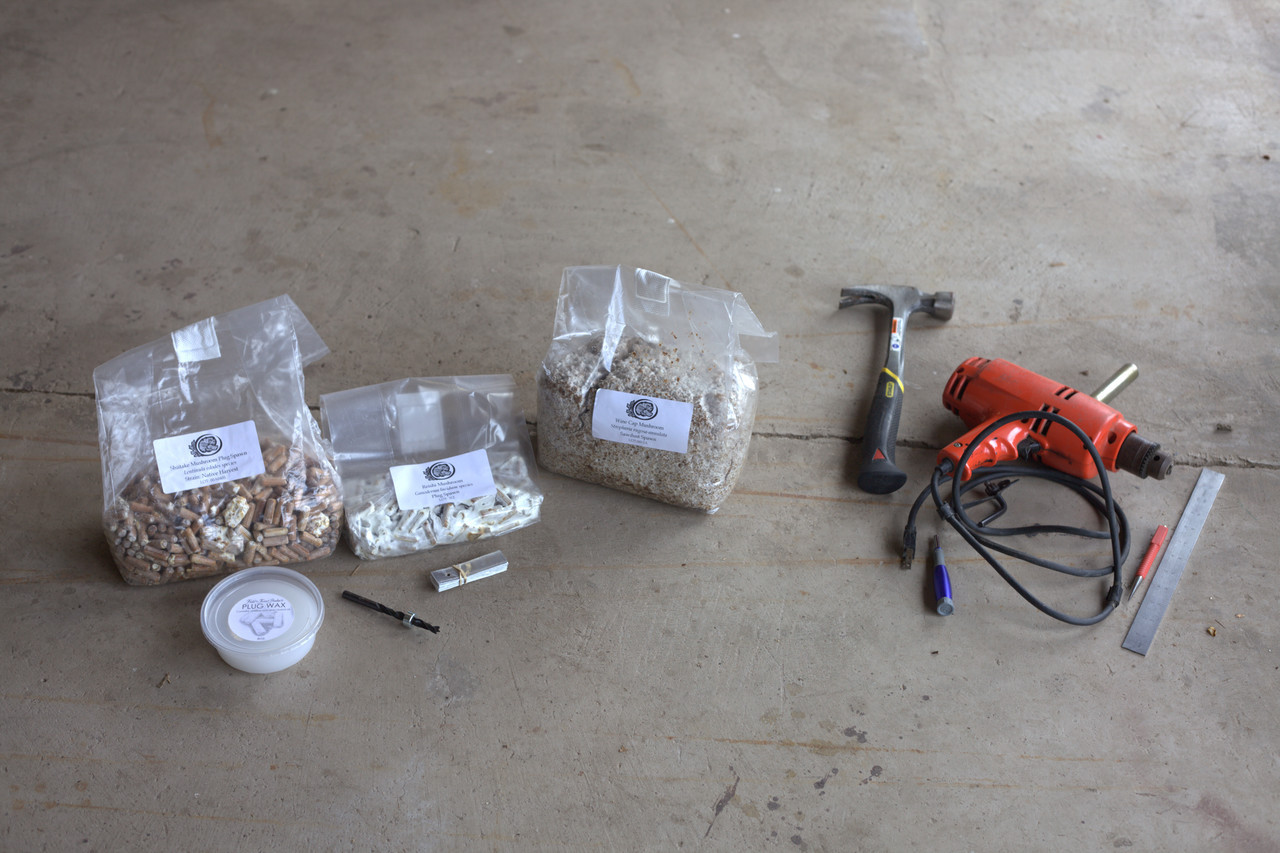 Mushroom spawn, tools, and supplies.[/caption] My own mushroom inoculating experience so far involved having my photographer John join me for a day of plugging logs, along with assistance from my son, over a one day period. What I learned from that experience is that, as Steve indicated, it is a labor intensive process. Using a starter kit from Field and Forest Products, paired with a hand-drill meant that it took 45 minutes to inoculate each log, once we got started. Combined with the video and photograph production time, we ran until we were running out of comfortable daylight and my wife was calling us to dinner. Drilling 50 holes, [caption id="" align="alignnone" width="1280"]
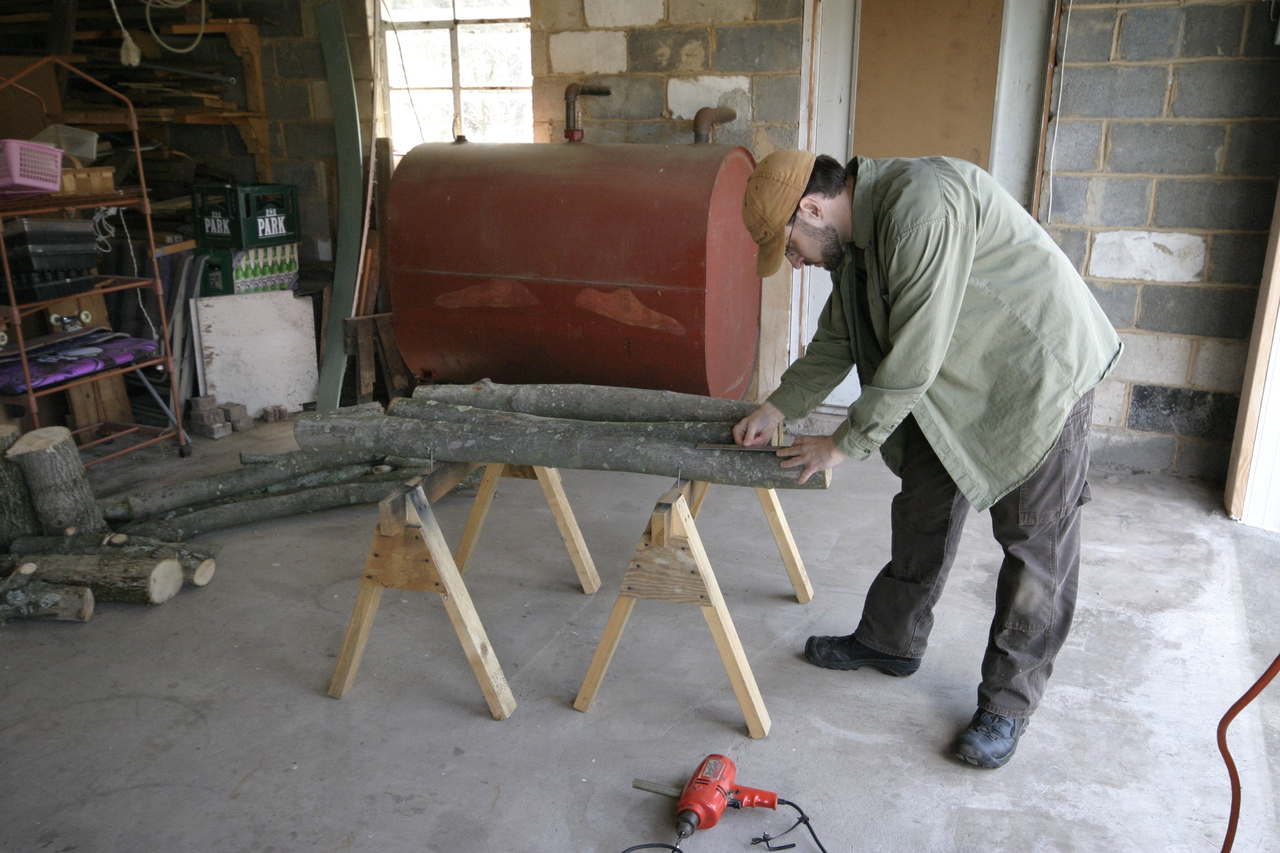 Lining up and marking holes before drilling.[/caption] plugging, and sealing them for each log was rather intense, but satisfying. That day John, my son and I we were able to plug 5 logs with shiitake spawn that day: three red maple and two red oak. I’m now picking my way as time allows through some relatively fresh logs to plug more shiitake, and some reishi. [caption id="" align="alignnone" width="1280"]
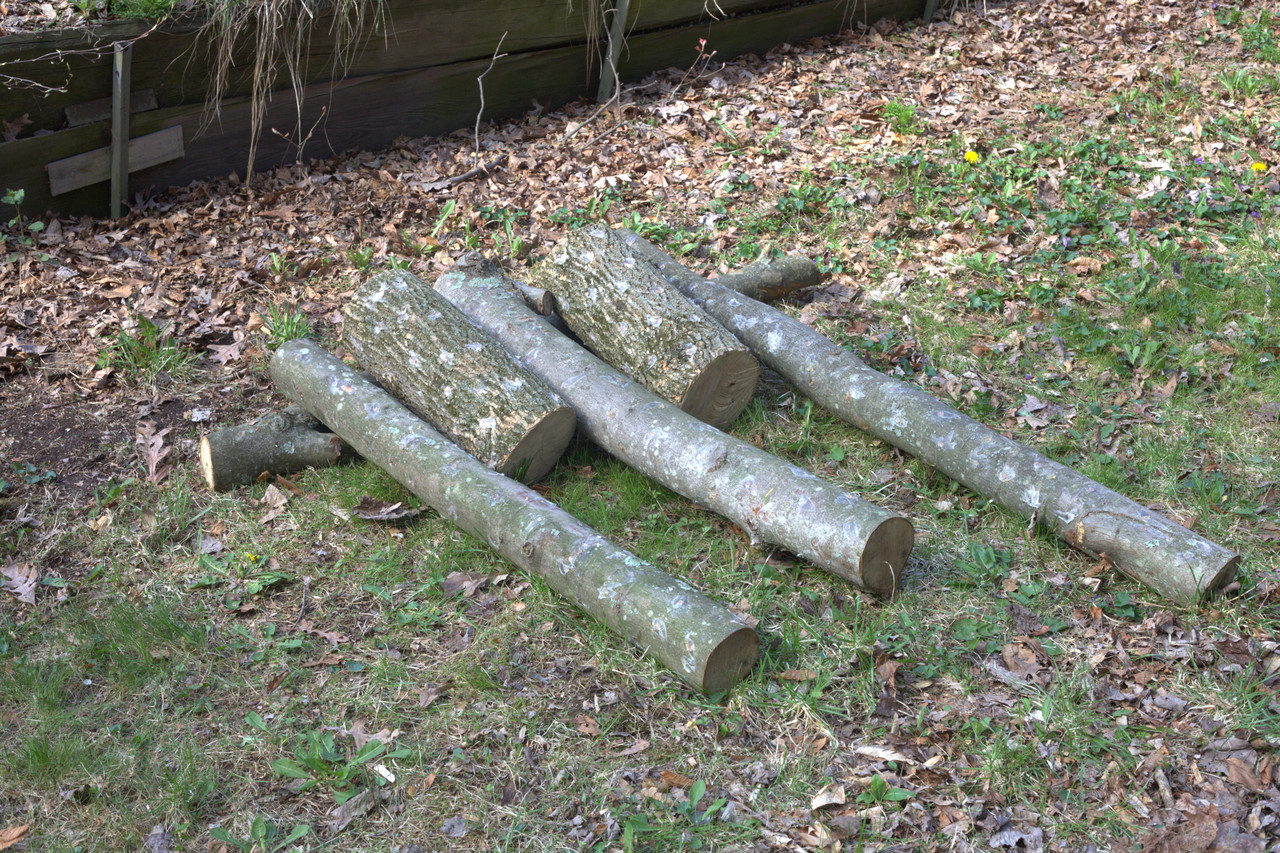 The logs at rest.[/caption] What I learned from this experience is that an ideal team for plugging logs is a 4 or 5 person team per station: 1 person to drill, 2 to plug, 1 to wax. That potential fifth would be there to turn the log for the driller and keep production moving. The Stropheria looks to be much easier, and I’ll know in a day or two of this episode coming out as I’ll be inoculating with 5lbs of sawdust spawn. More on that in the near future. Even though I have some time before I’ll be able to harvest the mushrooms, I’ve enjoyed experimenting with them and hope that you’ll take my step forward with this as encouragement to try your own hand at these species of mushroom as well.